A Five-Year Journey of Learning, Innovation, and Computing Excellence
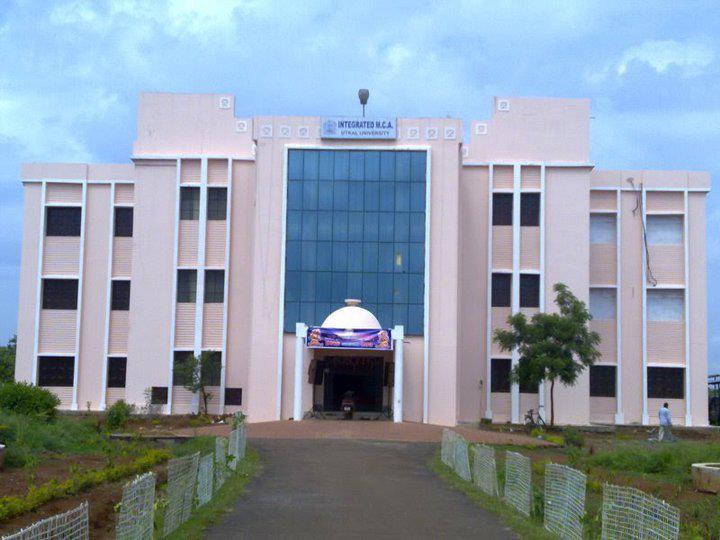
The Five-Year Integrated Master of Computer Applications (IMCA) programme, introduced in 1999 under the School of Mathematics, Statistics, and Computer Science & Applications, provides a seamless pathway from undergraduate to postgraduate education in computing. The programme offers a strong foundation in computer science, programming, software development, and emerging technologies through a well-structured and industry-oriented curriculum. It emphasizes problem-solving, innovation, practical learning, and research to bridge the gap between academia and industry. Aligned with NEP 2020, the programme promotes multidisciplinary learning, experiential education, and entrepreneurship, empowering students with the knowledge and skills required for successful careers in the IT industry, research, higher education, and technology-driven startups.

Thrust Areas of Research
Internet of Things (IoT)
Artificial Intelligence and Machine Learning
Soft Computing and Intelligent Systems
Data Mining and Data Analytics
Cloud and Distributed Computing
High-Performance Computing (HPC)
Parallel and Distributed Processing
Cyber Security and Network Security
Load Balancing and Resource Optimization
Vision
To provide higher quality education in Computer Applications and Information Technology by fostering academic excellence, innovation, and ethical values. The programme aspires to develop globally competent IT professionals with strong technical and entrepreneurial skills, enabling them to excel in the software industry, pursue higher studies and research, or establish successful technology-based ventures.
Mission
To provide a strong foundation in computer science by enhancing students’ knowledge, technical skills, and proficiency in emerging technologies.
To bridge the gap between academia and industry through an industry-oriented curriculum, experiential learning, internships, and skill development.
To promote innovation, research, and project-based learning in emerging areas of computing and information technology.
To nurture ethical values, leadership qualities, entrepreneurial mindset, and lifelong learning, enabling students to become responsible professionals and contribute effectively to society.
Distinctive Features
Offers a seamless five-year integrated curriculum that provides a strong foundation in computer science while enabling advanced learning in emerging technologies.
Implements the principles of NEP 2020 through a multidisciplinary, flexible, and outcome-based curriculum, emphasizing experiential learning, skill development, innovation, research, and entrepreneurship.
Provides diverse elective courses in advanced areas such as Artificial Intelligence, Machine Learning, Cloud Computing, Cyber Security, Blockchain Technology, Parallel Processing, Data Analytics, and Optimization Techniques.
Includes mandatory internships as an integral part of the curriculum, providing students with hands-on industry exposure, professional experience, and opportunities to apply classroom learning to real-world challenges.
Supported by experienced faculty members, modern computing laboratories, and ICT-enabled teaching–learning practices that enhance academic excellence and professional competence.
Encourages active participation in hackathons, coding competitions, innovation challenges, technical events, fostering creativity, teamwork, problem-solving, and industry-ready skills.
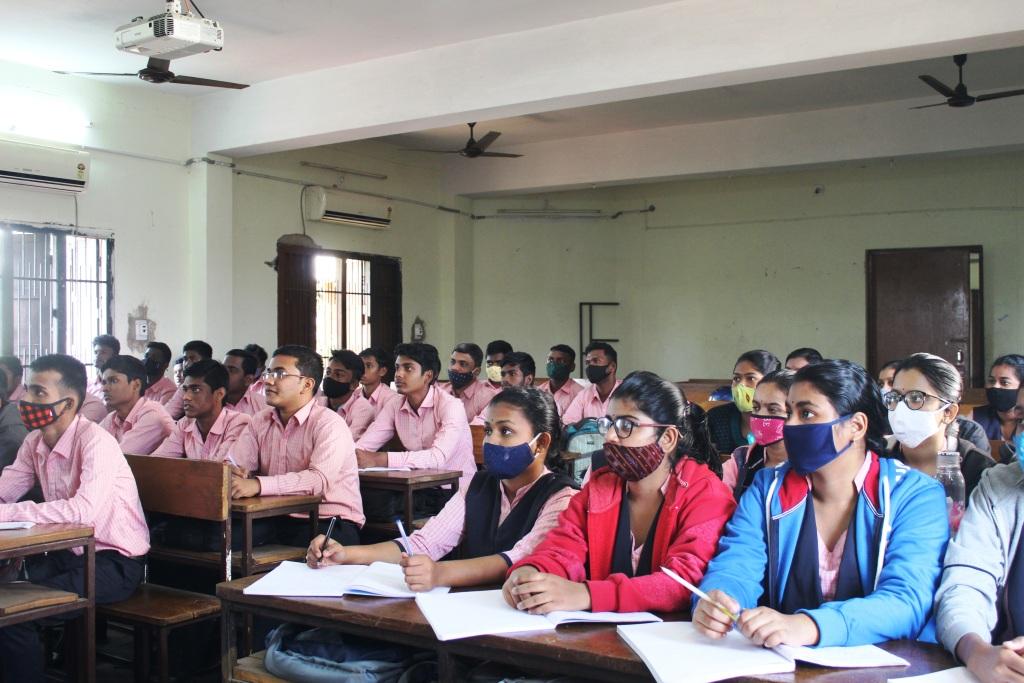
Five Smart Class Rooms with interactive Projectors (ICT Facilitated).
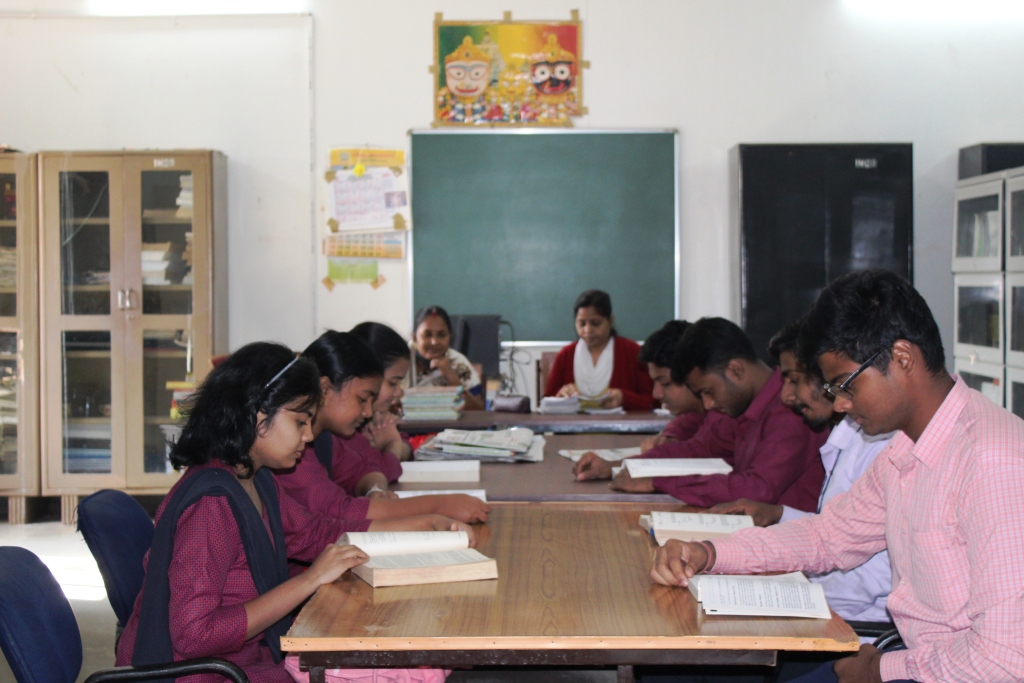
One Library with an attached reading room.
About 7000 Textbooks and Reference Books
Internet facilities for both staff and students
Two office rooms
One Faculty Room for faculties
One Course Coordinator room
Laboratory
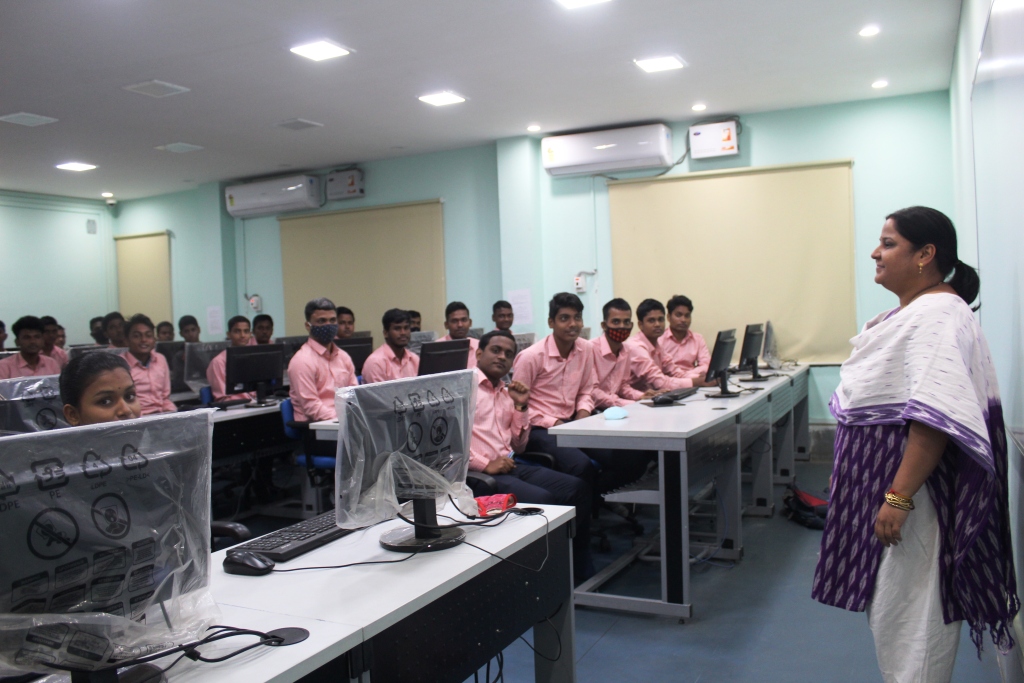
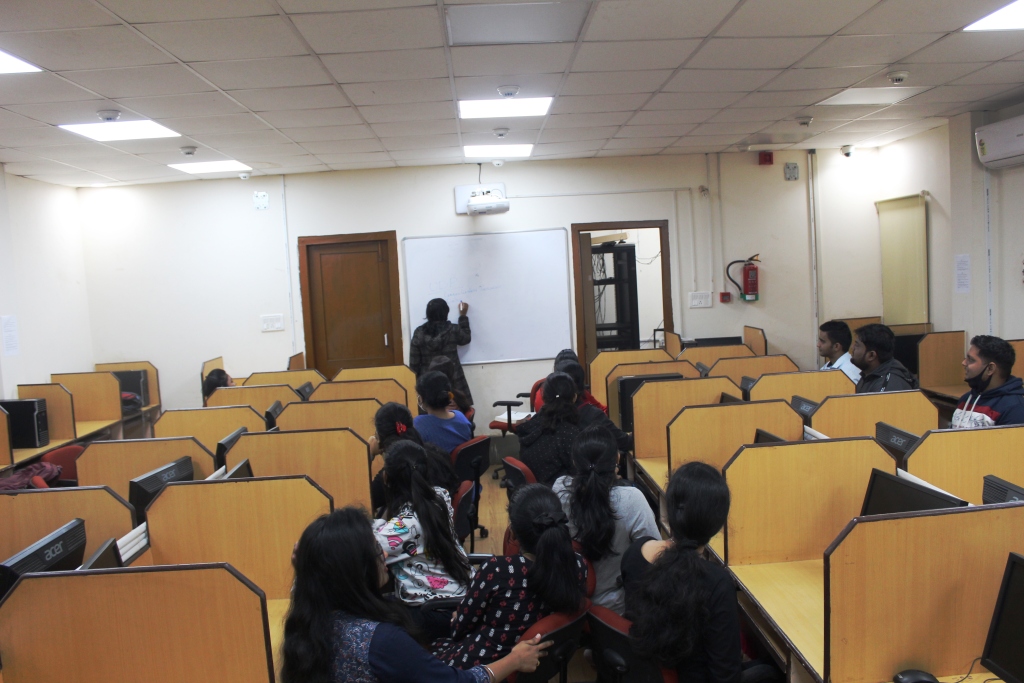
Two Computer Laboratories with120 Corei7 Desktop Computers with internet Facilities.
Publications
Pranati Satpathy Patent Publications :
AI Based Robotic Vehicle for Medical Instruments Collection and Sterilization published on 11-03-2022 with Application No- 202241009554 A.
Journal Publications :
P. Satapathy, S. Hota, S. K. Jena., “Classification of Brain Magnetic Resonance Images Using ICA-MLP”, International Research Journal on Advanced Science Hub, Vol. 3, 27-29, 2021.
P. Satapathy, S. Hota, S. K. Pradhan, “An Experimental Study on Classification of Brain Images”, International Journal of Current Research and Review, 13(15), 154-157, 2021.
S. Hota, P. Satapathy, D. Mishra, “ Forecasting of Net Asset Value using Modified Whale Optimization Algorithm based Ensemble Model”, International journal of Innovative Technology and Exploring Engineering , Vol.8 , Issue-5, pp. 379-384, 2019.
P. Satapathy, S. K .Pradhan, S. Hota, “Development of a novel neural network model for brain image classification”, International Journal of Recent Technology and Engineering, 8(3), 7230-7235 , 2019.
P. Satapathy, S. K .Pradhan, S. Hota, “Exploring the Extreme Learning Machine for Classification of brain MRIs”, International Journal of Engineering and Advanced Technology (IJEAT), 9(2) , 3654-3657, 2019.
S. Hota, P. Satapathy, D. Mishra, “A Survey on Net Asset value Prediction using Artificial Neural network and its Variants”, International Journal of Engineering & Technology, Vol. 7, No. 4, pp. 4496-4498, 2018.
International Conferences :
P. Satapathy, S. Hota, B. M. Acharya, “Performance Analysis of Hyper parameters of Convolutional Neural Networks for COVID-19 X-ray Image classification”, International Conference on Ambient Intelligence in Health Care, 2022.
P. Satapathy, S. Hota, A. Mohanty, D. Mishra, “Designing of Financial Time Series Forecasting Model using Stochastic Algorithm based Extreme Learning Machine”, International Conference on Intelligent and Cloud Computing , 2021.
P. Satapathy, S. Hota, S. K. Pradhan, “Brain Image Classification Using the Hybrid CNN Architecture”, Advances in Intelligent Computing and Communication, Lecture Notes in Networks and Systems 202, pp. 329-336, 2021
S. Hota, P. Satapathy, S. Pati, “Forecasting of Net Asset Value of Indian Mutual Funds using Firefly Algorithm based Neural Network Model”, Green Technology for Smart City and Society, Lecture Notes in Networks and Systems 151,pp. 217-224, 2021.
P. Satapathy, S. K. Pradhan, S. Hota, “Development of Hybrid Extreme Learning Machine for classification of Brain MRIs”, Intelligent and Cloud Computing, Smart Innovation, Systems and Technologies 194, pp. 289-296, 2021
S. Hota, A.K. Mohanty, P. Satapathy, D. Mishra, “Currency Exchange Rate Forecasting using FLANN-WCA Model In: International Conference on Applied Machine Learning (ICAML), pp. 114-119, 2019. (IEEE Explorer)
P. Satapathy, S. K. Pradhan, S. Hota, “An Empirical Performance Analysis of Brain Image Classification Models using Variants of Neural Networks”, In: International Conference on Applied Machine Learning (ICAML), pp. 87-91, 2019. (IEEE Explorer)
S. Hota, S.P. Pati, P. Satapathy, D. Mishra, “Net asset Value Prediction using Extreme learning machine with Dolphin Swarm Algorithm”, In: 2nd IEEE International Conference on Data Science and Business Analytics (ICDBSA), pp. 13-18, 2018.
S. Hota, P. Satapathy, A. K. Jagadev, “Modified Ant Colony Optimization Algorithm (MAnt-Miner) for classification rule mining”, in: International Conference on Intelligent Computing, Communication and Devices, Springer India, pp 267-275, 2014.
S. Tripathy, S. Hota, P. Satapathy, “MTACO-Miner: Modified Threshold Ant Colony Optimization Miner for Classification Rule Mining”, in: International conference on Emerging research in Computing Information Communication and Applications, pp. 529-534, 2013.
Aliva Priyadarshini
“Task Scheduling algorithm in Multi cloud Environment ” ,International Journal of Recent Technology and Engineering (IJRTE),2020
Stitapragyan Mohanty
“QoS Enhancement of Hospital e-Healthcare Management using IoT”, 19th OITS International Conference on Information Technology (OCIT). IEEE,2021.
“QoS Provisioning-Based Cost-Effective Routing in WSN Based IoT Network Using Fuzzy IDA* Technique”, 15th INDIACom (17th March2021) IEEE Conference on “Computing for Sustainable Global Development”.
“A Compendium on QoS matrices in IoT”, IJRTE, ISSN:2277-3878, Volume-8 Issue-6, March-2020.
“An Optimal Clustering Algorithm for Wireless Sensor Network”, International Conference on Signal Processing and Communication (ICSPC-17), published in IEEE.
Rashmita Padhi
Extended Crossed Cube with Cross Connection : A New Interconnection Network for High Performance Computing , 19th OITS International Conference on Information Technology (OCIT 2021) at Silicon Institute of Technology, Bhubaneswar (SiliconTech) from 16 – 18 December 2021
Tweakable block mode of operation for disk En-compression using ciphertext stealing , International Conference on Digital Democracy- IT for change by Computer Society of India (CSI)
Topological Properties of A New Fault Tolerant Interconnection Connection Network for High Performance Computing, 27th International Conference of International Academy of Physical Sciences (CONIAPS XXVII) on “Recent Advaces in Statistics & Operation Research” organized by Department of Mathematics , NIT Sikkim – India
Held on : October 26-28 , 2021
Modified K-Mean Algorithm using L2 Metric with Restriction Displacement and Cluster Size,Fourth National Conference on
“ VLSI Signal Processing and Communication – NCVSComs-2020”
Modified Version of XTS ( XOR Encrypt XOR with ciphertext stealing ) using Tweakable Enciphering Scheme International Conference on Communication and Electronics Systems (IEEE ICCES 2016)
Research Projects
Workshop/Seminar Details
Year
Name of the workshop/ seminar
Number of Participants
Date From – To
2021-22
1)Machine Learning Master Class
92
16th March 2022
2) Seven Reasons to Join Sales Force
85
11th March 2022
2020-21
1)Webinar on Dynamic and Competitive Programming
78
27th Nov 2020
2) Two days webinar and induction program by Tata Consultancy Services(TCS)
i)Python in Robotics
ii) Application of AI and & Machine Learning & Induction Program “Subharambha“